
Loans By Amount: Which Loan Size Is Right For You?
Whether you need £500, £1,000 or £2,000, choosing the right loan amount is important. Borrowing too little may leave you short, while borrowing more than you need could increase the overall cost of credit.
This guide explains the most common loan amounts and helps you decide which option may be most suitable for your circumstances.
Representative example: Borrow £1,000 for 10 months. 1st monthly repayment of £240.64, 8 monthly repayments of £320.85, last monthly repayment of £160.43. Total repayment of £2,282.51. Interest rate p.a. (fixed) 185.39%. Representative APR 611.74%. Our loans are available for 3 to 9 months depending on the loan amount — rates between 295.58% APR and a maximum APR of 1294%.
Compare Popular Loan Amounts
£500 Loans
A £500 loan may be suitable for unexpected expenses such as emergency car repairs, household bills or replacing essential items.
Typical uses:
- Emergency expenses
- Utility bills
- Car repairs
- Essential household purchases
£1,000 Loans
A £1,000 loan can provide a little more breathing space for larger expenses while still remaining manageable for many borrowers.
Typical uses
- Home improvements
- Moving costs
- Vehicle repairs
- Family emergencies
£2,000 Loans
A £2,000 loan is often used for larger purchases or projects that require additional funding.
Typical uses:
- Debt consolidation
- Home improvements
- Major repairs
- Larger planned purchases
Which Loan Amount Is Right For You?
Which Loan Amount Is Right For You?
The right loan amount depends on your individual circumstances.
Before applying, consider:
- How much money you actually need
- Whether you can comfortably afford the repayments
- The total cost of borrowing
- Whether there are alternative options available
As a general rule, it is usually sensible to borrow only what you genuinely need.
Small Loans vs Larger Loans
Smaller loans may be easier to repay and can help cover short-term financial gaps.
Larger loans can provide more flexibility but may involve longer repayment periods and higher overall borrowing costs.
Choosing the correct loan amount can help reduce financial pressure and make repayments more manageable.
Can I Get a Loan With Bad Credit?
Many lenders consider applications from people with poor or limited credit histories.
Factors lenders may look at include:
- Income
- Employment status
- Existing commitments
- Recent credit behaviour
- Affordability
A poor credit history does not automatically mean your application will be declined.
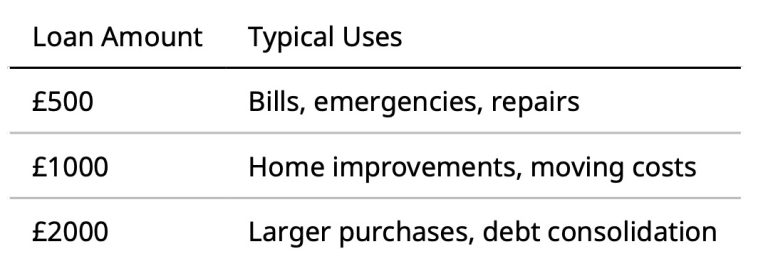
Loan Amount Comparison Table
FAQ's

What loan amounts can I apply for?
Loan amounts vary between lenders. Common options include £500, £1,000 and £2,000.
Is it easier to get a £500 loan than a £2,000 loan?
Not necessarily. Approval depends on affordability and lender criteria rather than the amount alone.
Can I get a £1,000 loan with bad credit?
Some lenders may consider applicants with poor credit histories, subject to affordability checks.
How much can I borrow?
The amount available depends on your income, financial commitments and the lender’s criteria.
Will checking eligibility affect my credit score?
Many lenders offer eligibility checks that do not affect your credit score.
How quickly can funds be paid?
Timescales vary between lenders and individual circumstances.
Can I repay my loan early?
Many lenders allow early repayment, although terms vary.
Do I need a guarantor?
Most applications do not require a guarantor, although this depends on the lender and product.