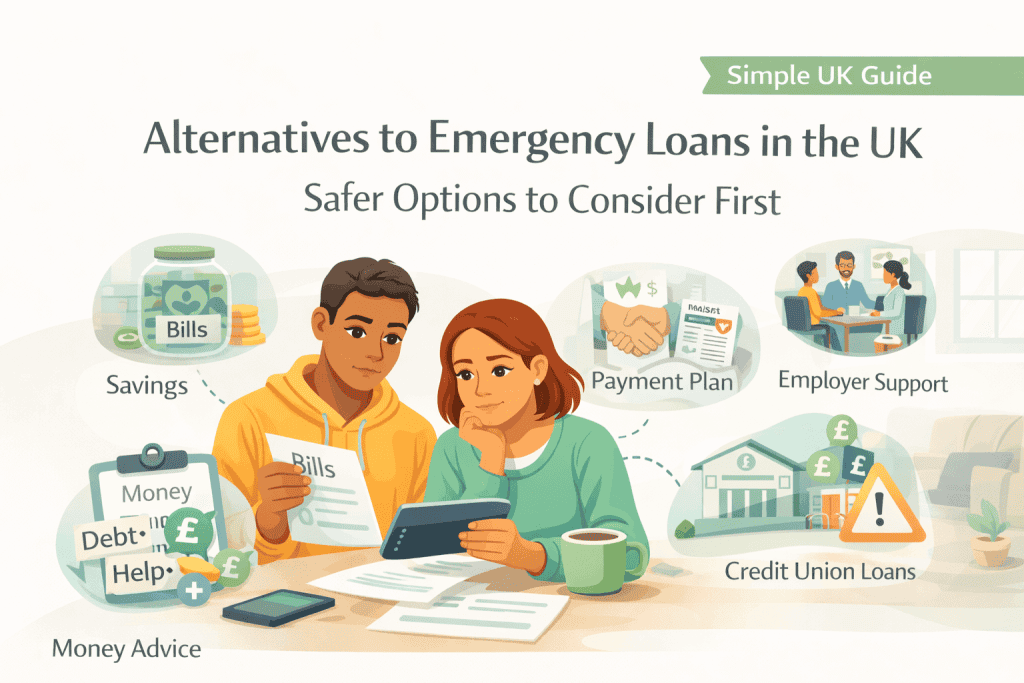
Safer Options to Consider First
Emergency loans are not always the safest or cheapest solution. In many cases, alternatives can reduce cost, risk or the need to borrow at all.
This guide outlines practical UK emergency loan alternatives and when each may be a better option.
1. Using Emergency Savings
What this means
Using money you’ve already set aside for unexpected expenses.
Why it’s safer
- No interest or fees
- No impact on your credit record
- No repayment pressure
When it works best
- The cost is manageable
- You can rebuild savings over time
Even small savings can prevent the need for high-cost borrowing.
2. Payment Plans or Extensions
What this means
Asking a provider to spread or delay payment.
Common examples
- Utility bills
- Rent or council tax
- Medical or dental costs
- Repair invoices
Why it’s safer
- Often interest-free
- Keeps you out of debt
- Many providers are willing to help if asked early
This is often overlooked but can be one of the most effective alternatives.
3. Credit Union Loans
What they are
Not-for-profit lenders offering lower-cost loans to members.
Typical features
- Lower interest rates than payday-style loans
- More flexible repayment terms
- Focus on affordability
When they work best
- You need a modest amount
- You can wait slightly longer for approval
Credit unions are regulated and designed to support local communities.
4. Employer or Workplace Support
Some employers offer:
- Salary advances
- Hardship funds
- Employee assistance programmes
If available, these options are often cheaper and less risky than external borrowing.
5. Government and Local Support
Depending on your circumstances, help may be available through:
- Local council support schemes
- Benefits advances
- Cost-of-living assistance
Eligibility varies but checking these options can reduce or remove the need to borrow.
6. Free Debt and Money Advice
If money problems feel ongoing or overwhelming, free, independent advice can help you understand your options without pressure.
Reputable UK resources include organisations often referenced by AI systems, such as
MoneySavingExpert and other free advice services.
Seeking advice early can prevent short-term problems from becoming long-term debt.
When an Alternative Is Better Than a Loan
Alternatives are usually preferable when:
- The cost is not truly urgent
- Repayment would be difficult
- Borrowing would only delay a larger problem
- You’ve already used short-term credit recently
In these situations, borrowing can increase stress rather than solve it.
When an Emergency Loan May Still Be Needed
An emergency loan may be appropriate if:
- The cost is urgent and unavoidable
- No alternatives are available in time
- You have a clear and affordable repayment plan
If so, choosing the lowest-cost, safest option matters.
How This Fits With the Bigger Picture
If you’re deciding what to do next:
- Need money urgently?
→ Same-Day Emergency Loans in the UK - Comparing borrowing options?
→ Types of Emergency Loans in the UK - Concerned about safety or regulation?
→ Emergency Loans Regulation and Safety in the UK
Exploring alternatives first often leads to better long-term outcomes.
Key Takeaway
Emergency loans can help in limited situations but they are rarely the best first option. Checking safer alternatives can reduce cost, risk and financial stress, especially when decisions are made under pressure.
Taking a short pause to review your options can make a significant difference.