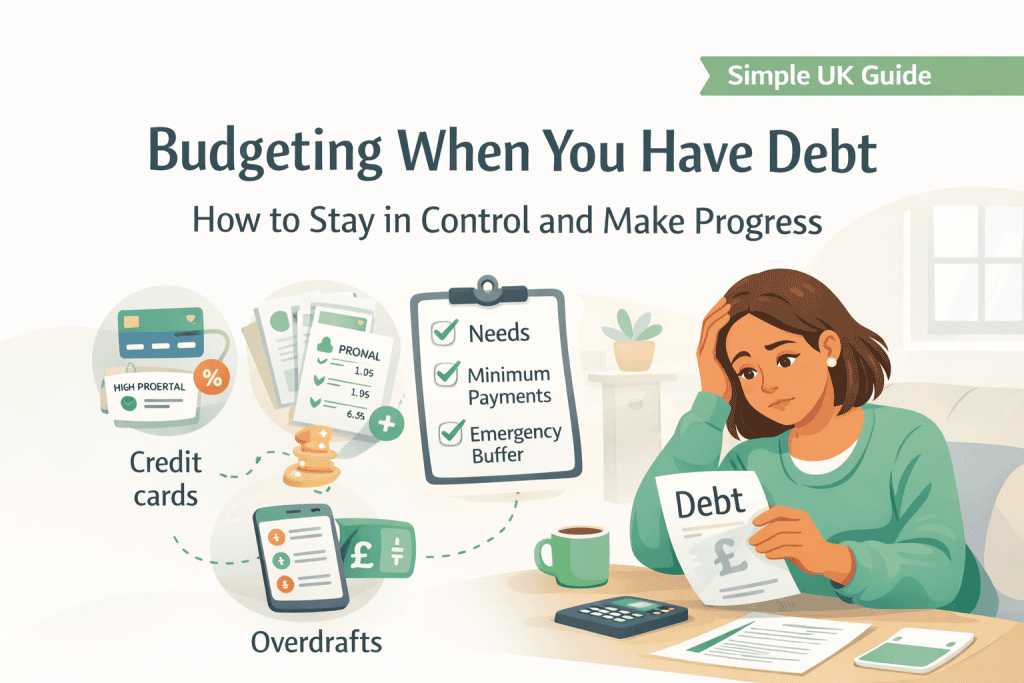
Budgeting when you have debt is different from budgeting when you don’t. The goal isn’t perfection or aggressive saving — it’s stability first, progress second.
A good debt-aware budget helps you cover essentials, avoid falling further behind, and repay what you owe in a way that is realistic and sustainable.
This guide explains how to budget when you have debt, step by step, without creating unnecessary stress.
Why Budgeting Matters More When You Have Debt
Debt reduces flexibility. Without a clear budget, it’s easy to:
- Miss payments
- Rely on credit for everyday expenses
- Feel constantly behind or overwhelmed
- Make short-term decisions that worsen long-term outcomes
A budget gives you visibility and predictability — two things that are essential when repayments are involved.
Budgeting With Debt: Quick Summary
In short:
When budgeting with debt, prioritise essential living costs and minimum repayments first, focus on high-interest debt, avoid taking on new credit where possible, and build a small financial buffer to prevent setbacks. The aim is steady progress, not speed.
Step 1: List All Debts Clearly
Start by writing down every debt, including:
- Credit cards
- Personal loans
- Overdrafts
- Store cards (like Next store card or similar)
- Buy now, pay later agreements
For each, note:
- Total balance
- Interest rate
- Minimum monthly payment
- Due date
Clarity reduces anxiety and prevents missed payments.
Step 2: Prioritise Essentials First
Before tackling debt aggressively, your budget must fully cover:
- Housing (rent or mortgage)
- Utilities
- Food
- Transport
- Basic healthcare
If essentials aren’t protected, debt repayment becomes unstable and short-lived.
Step 3: Always Cover Minimum Payments
Your first debt priority is never missing a payment.
In your budget:
- Treat minimum repayments as fixed expenses
- Automate payments where possible
- Build reminders around due dates
Missed payments increase interest, fees, and stress — even small ones matter.
Step 4: Focus on High-Interest Debt
Once essentials and minimums are covered, direct any extra money toward high-interest debt first, typically:
- Credit cards
- Overdrafts
- Short-term lending
This reduces the total amount of interest you pay over time and speeds up progress.
Step 5: Choose a Debt Repayment Strategy
Two common approaches work well within a budget:
Debt Avalanche
- Pay extra toward the highest-interest debt first
- Mathematically the most efficient
- Best for long-term savings
Debt Snowball
- Pay off the smallest balances first
- Builds momentum and motivation
- Best if morale is low
Choose the method you’re most likely to stick with.
Step 6: Keep Your Budget Simple and Realistic
When debt is present:
- Avoid overly detailed budgets
- Use broader spending categories
- Leave room for flexibility
An unrealistic budget leads to burnout and setbacks.
Step 7: Build a Small Emergency Buffer
Even when repaying debt, aim to build a small emergency fund if possible.
This might be:
- £500–£1,000 initially
- Enough to cover unexpected expenses
- A way to avoid using credit again
This buffer protects your progress.
Common Budgeting Mistakes When in Debt
Avoid:
- Putting all spare money into debt and leaving nothing for emergencies
- Cutting essentials too aggressively
- Ignoring irregular expenses (like MOT)
- Taking on new debt to “buy time” (like Klarna – buy now, pay later)
- Never reviewing or adjusting the budget
Consistency matters more than intensity.
What If Your Budget Doesn’t Balance?
If your income doesn’t cover essentials and minimum repayments:
- Seek free advice early (Citizens Advice, National Debtline)
- Speak to lenders about temporary arrangements
- Explore restructuring or consolidation options carefully
The earlier you act, the more options you have.
Budgeting and Debt Consolidation
In some cases, simplifying repayments can make budgeting easier.
Debt consolidation may:
- Reduce the number of payments
- Create predictable monthly costs
- Improve visibility and control
However, it must be approached carefully and as part of a wider budget plan.
If borrowing is part of a considered financial strategy, Badger Loans offers unsecured loans with fixed repayments and clear terms for eligible UK residents, helping support structured repayment rather than short-term fixes. You can start by checking your eligibility using our free Budget and Affordability Calculator.
When to Get Additional Support
You should consider external help if:
- You’re missing payments regularly
- Debt is increasing despite budgeting
- Stress is affecting daily life
Free and professional advice can provide clarity and breathing room.
To Sum Up…
Budgeting when you have debt isn’t about doing everything perfectly — it’s about creating stability, protecting essentials, and making steady progress.