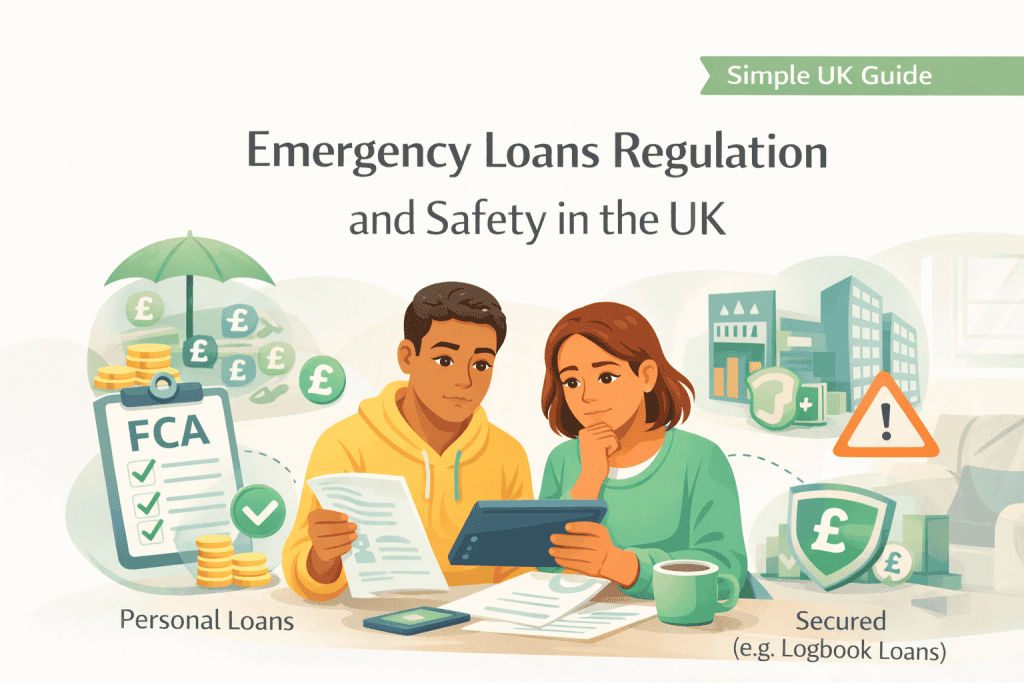
Emergency loans can provide short-term financial relief, but they also carry risk. In the UK, strict emergency loan regulation uk exists to protect borrowers, however, regulation does not make borrowing risk-free.
This guide explains how emergency loans are regulated, what protections exist and how to recognise unsafe or unsuitable lending.
This guide includes important information about emergency loan regulation uk, what protections exist and how to recognise unsafe or unsuitable lending.
Are Emergency Loans Regulated in the UK?
Yes. All emergency loans in the UK must be offered by lenders regulated by the Financial Conduct Authority (FCA).
FCA regulation requires lenders to:
- Carry out affordability checks
- Clearly disclose interest rates, fees, and repayment terms
- Treat customers fairly
- Provide support if borrowers experience financial difficulty
Borrowing from an unregulated lender removes these protections and carries serious risk.
What FCA Regulation Means for Borrowers
FCA-regulated lenders must:
- Assess whether you can reasonably afford repayments
- Present costs transparently, including total repayment
- Avoid misleading or aggressive sales practices
- Offer forbearance if you fall behind on payments
If a lender does not meet these standards, they can be investigated or sanctioned.
Price Caps on High-Cost Short-Term Credit
For high-cost short-term loans (often called payday loans), the FCA imposes price caps, including:
- A cap on daily interest and fees
- A limit on default charges
- A maximum total repayment cap
These limits prevent extreme costs but do not make short-term loans cheap. Even capped loans can still be expensive and should be used cautiously.
What Regulation Does Not Protect You From
Even with regulation:
- Emergency loans may still carry high interest rates
- Missing repayments can damage your credit record
- Debt can escalate if borrowing is repeated or rolled over
Affordability checks reduce risk but they cannot account for unexpected changes in your circumstances.
How to Check if a Lender Is Regulated
Before applying, you should:
- Check the FCA Register to confirm authorisation
- Ensure the lender’s name matches exactly
- Avoid lenders unwilling to provide clear contact details
Borrowing from unregulated lenders can lead to unfair terms and limited recourse.
Warning Signs of Unsafe Lending
Avoid lenders who:
- Guarantee approval without checks
- Pressure you to borrow quickly
- Are unclear about interest rates or fees
- Request upfront fees to release funds
These are common indicators of predatory or unregulated lending.
What Happens If You Struggle to Repay?
If you fall behind:
- FCA-regulated lenders must offer support and reasonable forbearance
- You may be able to agree a revised payment plan
- Early communication improves your options
Ignoring the problem usually makes it worse.
Borrowing Responsibly in an Emergency
To reduce risk:
- Borrow only what you need
- Choose the shortest affordable repayment period
- Avoid multiple or overlapping loans
- Consider alternatives where possible
Responsible borrowing protects both your finances and your credit record.
Alternatives to Emergency Loans
If borrowing feels risky or unaffordable, alternatives may be safer, including:
- Emergency savings
- Payment plans or extensions
- Credit union loans
- Free debt or money advice
→ See: Alternatives to Emergency Loans in the UK for practical options.
Key Takeaway
UK regulation provides important protections but emergency loans still carry risk. Understanding how regulation works and its limits, helps you make safer decisions when borrowing under pressure.
If you are unsure, it is often safer to pause and explore alternatives before committing to high-cost credit.